
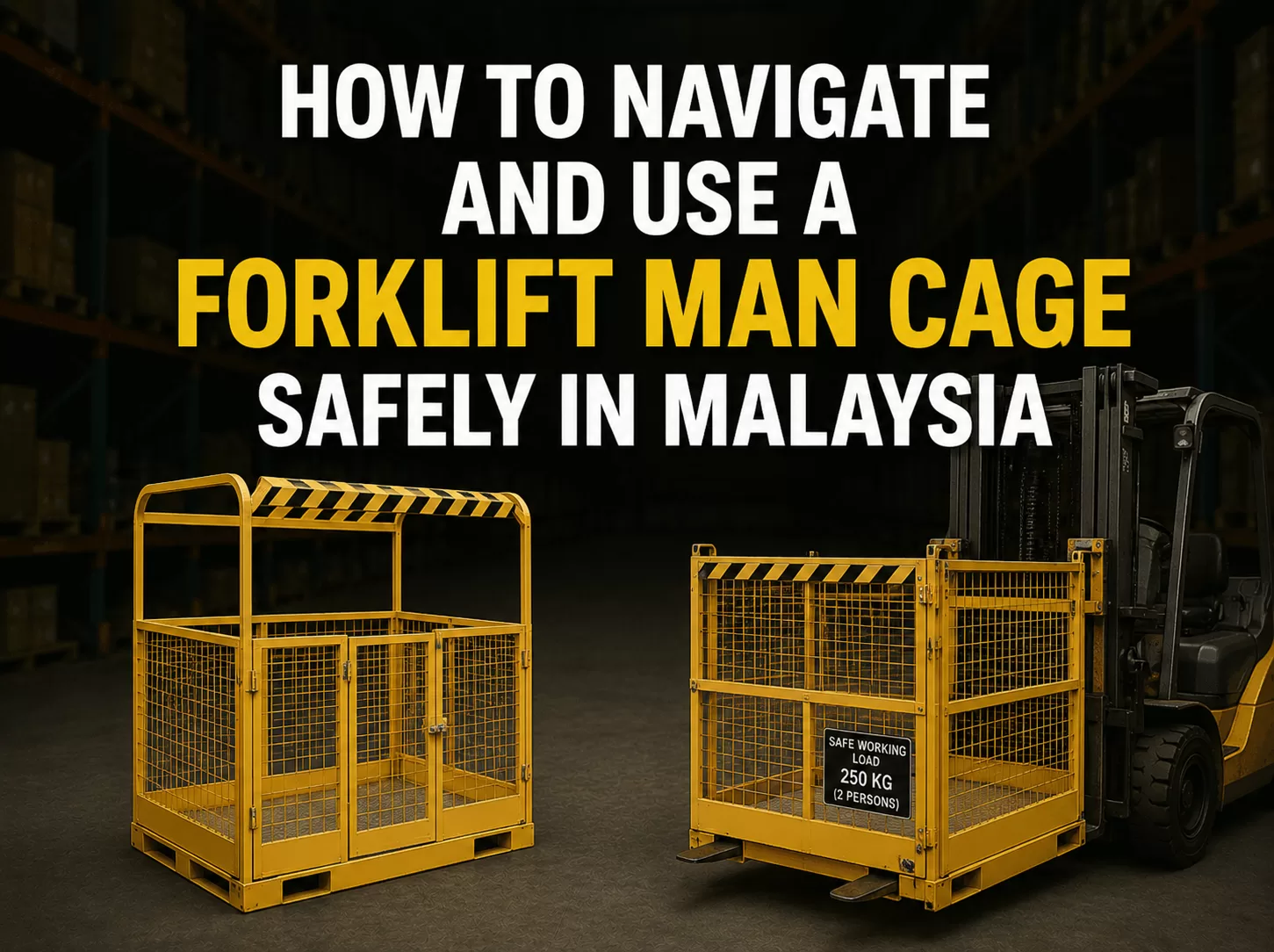
Forklift man cages are essential tools in many Malaysian factories and warehouses, providing safe elevated access for maintenance, inspection, and facility work. While they streamline a range of tasks, their safe use requires strict adherence to best practices and safety standards. This comprehensive guide will help maintenance teams, facility managers, and safety supervisors understand how to navigate and use a forklift man cage safely in Malaysia, ensuring both operational efficiency and worker safety. For readers comparing options, Forklift Man Cage Malaysia is the main topic this guide explains.
Understanding Forklift Man Cages
A forklift man cage, sometimes called a forklift work platform or personnel cage, is an attachment designed to securely lift workers using a forklift. These cages are commonly used for tasks such as changing light fixtures, overhead inspections, stocktaking, facility repairs, and accessing hard-to-reach areas. In Malaysia, using a forklift man cage is subject to strict safety regulations set by the Department of Occupational Safety and Health (DOSH).
It is crucial to select a cage that is engineered for compatibility with your forklift and meets relevant safety standards. High-quality cages feature sturdy mild steel construction, secure locking mechanisms, safety chains, and non-slip floors, ensuring both the operator and the occupant remain protected during use.
Pre-Operation Safety Checks
Before using a forklift man cage, thorough pre-operation checks are essential. Start by inspecting the man cage itself for visible damage, loose welds, or worn components. Confirm that safety gates, locks, handrails, and toe boards are in place and functioning correctly. The cage should be clean, free from oil or debris, and have clear safety markings.
- Check the forklift: Ensure the forklift is rated to lift the combined weight of the cage and occupants. Review the manufacturer’s load chart and verify the forks are in good condition.
- Attachment security: The man cage must be properly secured to the forklift, typically via heel locks, fork pockets, and safety chains. Double-check all securing devices before elevating the platform.
- PPE and equipment: Workers using the cage should be equipped with proper personal protective equipment (PPE) such as helmets, safety harnesses, and fall arrest systems as required by Malaysian safety regulations.
Best Practices for Navigating with a Forklift Man Cage
Operating a forklift with a man cage attached is different from standard forklift work. Both the operator and the elevated worker must be aware of their responsibilities and surroundings at all times.
1. Operator and Occupant Communication
Before starting any movement, establish clear communication signals between the forklift operator and the person in the cage. Use agreed-upon hand signals or two-way radios, especially in noisy industrial environments.
2. Movement Protocols
- Never move the forklift while the man cage is elevated, unless the cage is specifically designed and approved for such movement.
- Raise and lower the cage slowly and smoothly to prevent sudden jerks or instability.
- Position the forklift on a flat, stable surface and ensure the path is clear of obstacles, debris, or overhead obstructions.
3. Occupant Conduct
- Occupants must stay within the confines of the cage at all times, with hands and feet inside the platform.
- Standing on guardrails or using makeshift ladders inside the cage is strictly prohibited.
- Always secure the safety harness to the designated anchor point in the cage.
Compliance with Malaysian Safety Standards
Malaysia’s DOSH and industry safety guidelines require that forklift man cages meet specific construction and operational standards. Only trained and competent personnel should operate forklifts and work within man cages. Regular training sessions should be held to reinforce best practices, emergency procedures, and equipment inspection routines.
Employers are responsible for providing appropriate equipment, maintaining regular inspection logs, and ensuring that all safety features are operational. Non-compliance with safety standards can lead to serious accidents, legal penalties, and business disruptions.
Regular Maintenance and Inspection
To ensure ongoing safety, schedule routine maintenance for both forklifts and man cages. Inspections should cover weld integrity, locking mechanisms, floor condition, handrails, and safety chains. Document all maintenance activities and immediately address any identified issues.
Work with reputable suppliers, such as CCH Resources & Engineering Sdn Bhd, who offer after-sales support, repairs, and custom fabrication services to keep your equipment in peak condition.
Common Hazards and How to Avoid Them
- Tip-overs: Prevent tip-overs by never overloading the cage, keeping the load balanced, and operating on level ground.
- Falls: Minimise fall risks by ensuring proper use of harnesses, secure locking of entry gates, and never climbing on the cage structure.
- Collisions: Always check the surrounding area for overhead cables, beams, or moving vehicles before elevating the cage.
- Equipment failure: Address mechanical issues immediately and never use damaged cages or forklifts for lifting people.
Conclusion: Building a Culture of Safety
Proper navigation and use of a forklift man cage in Malaysia require a combination of the right equipment, thorough inspections, clear communication, and strict adherence to safety protocols. By following these best practices and working with experienced suppliers, facility managers and maintenance teams can ensure safe elevated work and reduce workplace risks. Remember, safety is a shared responsibility that starts with awareness and is sustained through ongoing training and vigilance.
Frequently Asked Questions
What is a forklift man cage and when should it be used?
A forklift man cage is a specially designed platform that attaches to a forklift, allowing workers to be safely elevated for tasks such as maintenance, inspection, or stocktaking. It should be used when other safer means of access, such as ladders or scaffolds, are not practical or available, and only by trained personnel following all relevant safety guidelines.
Are there legal requirements for using forklift man cages in Malaysia?
Yes, the use of forklift man cages in Malaysia is regulated by the Department of Occupational Safety and Health (DOSH) and must comply with industry safety standards. Only approved cages should be used, and operators and occupants must be properly trained. Employers are responsible for maintaining equipment and ensuring safe work practices.
What are key safety tips for operating a forklift man cage?
Key safety tips include conducting pre-use inspections of both the forklift and cage, securing the cage properly, using personal protective equipment, maintaining clear communication between operator and occupant, never moving the forklift while elevated (unless permitted by design), and ensuring only trained staff operate and use the cage.
How often should forklift man cages be inspected and maintained?
Forklift man cages should be visually inspected before each use and undergo more thorough maintenance checks at regular intervals, as recommended by the manufacturer and company safety protocols. Any damage or defects should be addressed immediately, and records of inspections should be maintained.
Can I use any forklift with a man cage, or are there compatibility requirements?
Not all forklifts are suitable for use with a man cage. Ensure the forklift is rated for the weight of the cage and occupants, and that the cage is compatible with the forklift’s fork size and capacity. Always consult both the forklift and cage manufacturer’s guidelines before use.
Ensure Safe Elevated Work with CCH Resources & Engineering Sdn Bhd
Protect your team and optimise facility operations with certified forklift man cages and comprehensive material handling solutions from CCH Resources & Engineering Sdn Bhd. Benefit from over a decade of industry experience, custom fabrication expertise, and reliable after-sales support. Contact our specialists to discuss your requirements and ensure your workplace meets Malaysian safety standards.