
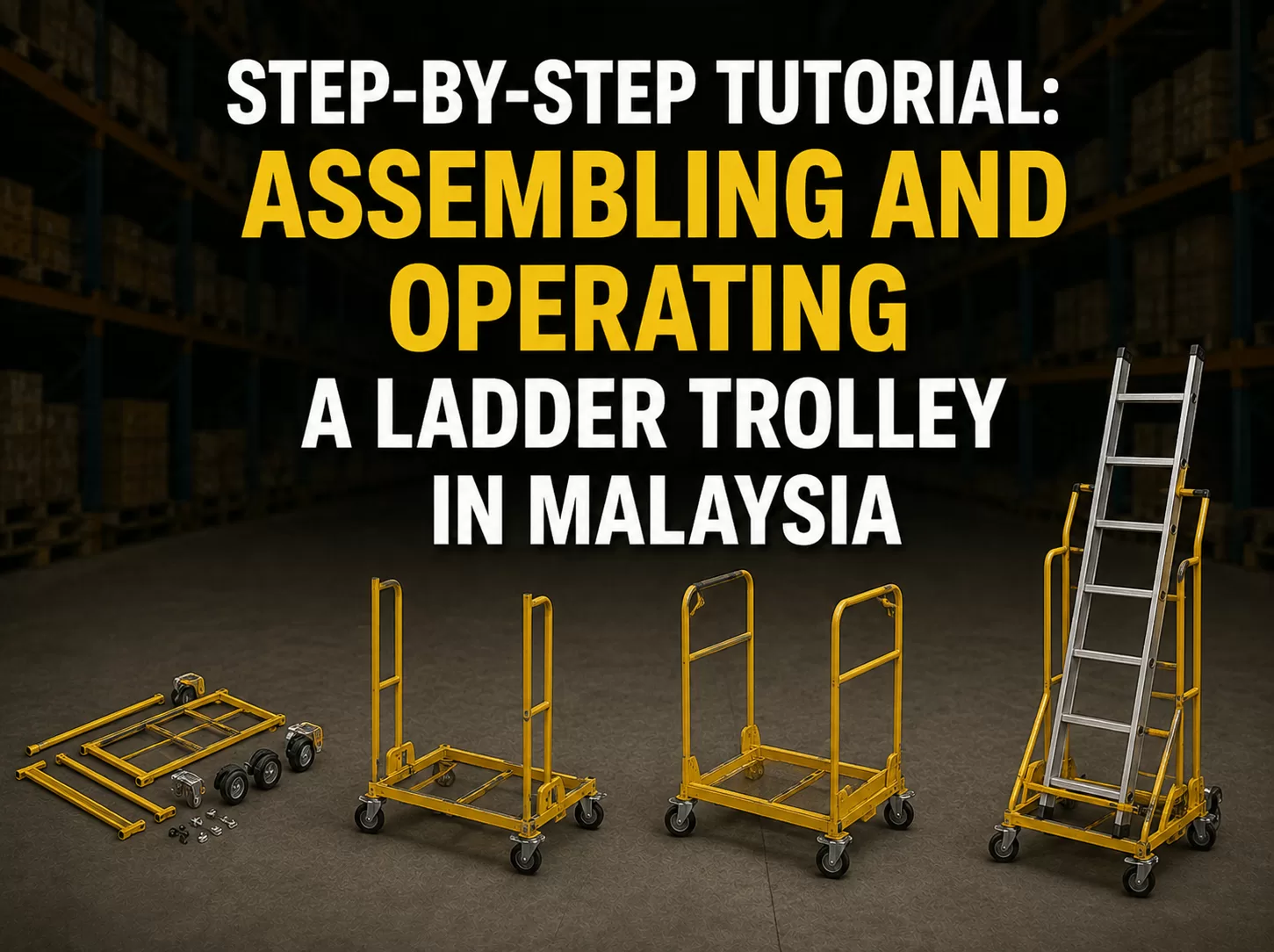
Ladder trolleys are essential tools for factory maintenance teams, warehouse staff, and facility engineers across Malaysia. They combine the convenience of a rolling platform with the safety and access of a ladder, making them ideal for tasks such as inventory picking, overhead maintenance, and facility repairs. In this comprehensive step-by-step guide, we’ll walk you through assembling and operating a ladder trolley in Malaysia, ensuring your team works efficiently and safely.
Understanding Ladder Trolley Components
Before starting assembly, it’s important to familiarize yourself with the key components of a typical ladder trolley Malaysia solution. While variations exist, most units supplied by reputable providers like CCH Resources & Engineering Sdn Bhd include:
- Frame: The main structure, often fabricated from mild steel for durability.
- Steps/Rungs: Heavy-duty steps or rungs for safe climbing.
- Platform: A secure standing area at the top for reaching elevated shelves or equipment.
- Handrails: Side or top rails that provide additional safety.
- Swivel Casters: Lockable wheels for mobility and stability.
- Fasteners: Bolts, nuts, and washers for assembly.
Check your package for a parts list and confirm that all items are present and undamaged before beginning assembly. If your trolley includes optional features such as tool trays, document holders, or safety toe boards, take note of their intended installation points. Proper identification of each part will streamline the assembly process and prevent errors later on.
Step-by-Step Assembly Instructions
- Prepare Your Workspace
- Clear a flat, stable area with sufficient space to lay out all components. Good lighting and a clean floor reduce the chances of losing small parts and help prevent trip hazards.
- Gather required tools, typically including spanners, a wrench set, and a screwdriver. Have a measuring tape on hand to verify that all sections align according to the assembly diagram.
- Assemble the Main Frame
- Lay out the side rails and crossbars. Attach crossbars to the side rails using the provided bolts and nuts, aligning holes as per the manufacturer’s instructions.
- Tighten all fasteners loosely at first to allow for adjustment. This allows you to correct any misalignment before the final tightening stage.
- Install Steps and Platform
- Secure the steps to the frame, starting from the bottom and working upwards. Ensure each step is level before fully tightening bolts.
- Position the platform at the top of the frame and fasten it securely. Use a spirit level to check that the platform is even, as an unlevel platform can compromise safety.
- Attach Handrails and Safety Features
- Install side and top handrails for added stability and user safety. Use all locking pins and bolts provided.
- If your model includes toe boards or guardrails, attach them to prevent items from falling off the platform. Double-check that all safety features are firmly in place before proceeding.
- Install Casters
- Flip the assembled frame gently onto its side and attach the swivel casters to the base, following the torque guidelines for secure fastening.
- Check that wheels roll smoothly and locking mechanisms engage and disengage properly. Swivel casters should rotate freely without excessive play.
- Final Tightening and Inspection
- Go over all fasteners and tighten them fully, ensuring the structure is rigid and stable.
- Inspect the assembled ladder trolley for sharp edges, loose parts, or any signs of damage. If you detect any manufacturing defects or missing hardware, contact your supplier before use.
Common Assembly Mistakes to Avoid
- Overtightening fasteners: This can strip threads or damage components. Tighten to manufacturer-recommended torque.
- Skipping steps in the manual: Always follow the provided instructions step by step—missing a step can lead to unsafe assemblies.
- Forgetting to check caster locks: Ensure all wheels lock and unlock correctly before using the trolley.
- Not leveling the platform: An uneven platform increases the risk of falls—use a level to verify.
Operational Safety Checks Before Use
Before putting your ladder trolley into service, conduct a thorough safety inspection:
- Stability: Verify the trolley stands evenly with all casters on the ground.
- Mobility: Test caster movement and brakes to ensure the trolley can be easily positioned and locked in place.
- Handrails and Platform: Check that handrails are firmly attached and the platform is secure, with no movement.
- Load Limit: Confirm the maximum load rating as stated by the manufacturer—never exceed this limit.
- Labeling and Signage: Make sure any warning labels or instructions provided by the manufacturer are visible and legible to all users.
Provide staff with a quick orientation on the assembly and safe use of the ladder trolley before authorising its use in daily operations. Consider incorporating ladder trolley safety into your regular workplace safety briefings and displaying a laminated checklist near the storage area for quick reference.
How to Operate a Ladder Trolley Safely
- Positioning
- Unlock the wheels and carefully maneuver the ladder trolley to the desired location.
- Ensure the path is clear of debris and obstructions. Avoid wet or oily floors, as these increase the risk of slipping.
- Securing the Trolley
- Lock all casters before climbing to prevent movement.
- Double-check that the trolley is stable and not on an incline. If on a slightly uneven surface, reposition the trolley or use leveling feet if available.
- Climbing and Working
- Always face the steps when climbing and maintain three points of contact. Wear slip-resistant footwear for added safety.
- Carry tools in a tool belt or pouch, keeping hands free for climbing.
- Work from the platform, using handrails for added balance. Never overreach—descend and reposition the trolley as needed to access items safely.
- Descending and Moving
- Descend slowly, facing the steps.
- Only unlock casters once all personnel have fully dismounted. Never attempt to move the trolley while anyone is on it.
- After Use
- Inspect the trolley for any signs of wear or damage.
- Store in a designated area, away from high-traffic paths when not in use. Consider marking a parking zone with floor tape to keep walkways clear.
Scenario Example: Warehouse Picking
Imagine your team is tasked with picking inventory from high shelves. By positioning the ladder trolley directly in front of the picking location, locking the wheels, and ascending safely, workers can access stock efficiently. If the items are heavy or bulky, use a two-person team—one to stabilize the trolley and hand items down. This reduces risk and increases productivity compared to traditional ladders or step stools.
Maintenance Tips for Longevity
Regular maintenance extends the life and safety of your ladder trolley:
- Routine Inspections: Check fasteners, casters, and handrails weekly for loosening or wear. Add inspection dates to a maintenance log for accountability.
- Lubrication: Apply light lubricant to moving caster parts as needed. Avoid over-lubricating, which can attract dust and debris.
- Cleaning: Wipe down the frame and steps to remove dust, oils, or residue. Use mild detergents to prevent corrosion of metal parts.
- Professional Servicing: Schedule periodic maintenance or repairs with qualified technicians, especially for trolleys used in demanding environments. Keep a record of all repairs and part replacements.
- Replacement Parts: Source genuine replacement parts from your supplier to maintain warranty coverage and ensure continued safety.
Partnering with an experienced provider like CCH Resources & Engineering Sdn Bhd ensures access to after-sales support, maintenance, and repair services for your material handling equipment. Regular engagement with your supplier can also provide updates about new safety features or product upgrades.
Frequently Asked Questions
What tools are required to assemble a ladder trolley?
Assembly typically requires basic hand tools such as spanners, a set of wrenches, and screwdrivers. Always refer to the manufacturer’s instructions for any specific tools needed.
How can I ensure the ladder trolley is safe to use?
Always perform a safety inspection before use. Check that all bolts are tightened, handrails and platform are secure, casters lock properly, and the trolley stands stable on a level surface.
What is the maximum weight a ladder trolley can support?
The load capacity varies by model and manufacturer. Always check the product specifications—most industrial ladder trolleys in Malaysia are rated between 150 kg and 300 kg.
Can a ladder trolley be customised for specific factory needs?
Yes, many suppliers such as CCH Resources & Engineering Sdn Bhd offer custom fabrication, allowing you to specify dimensions, platform size, number of steps, and additional safety features.
How often should a ladder trolley be maintained?
A weekly inspection is recommended for frequently used trolleys, with lubrication and cleaning as needed. Schedule professional servicing at least annually or if any defects are noticed.
Upgrade Your Material Handling with Durable Ladder Trolleys
Streamline your warehouse, factory, or facility operations with expertly engineered ladder trolleys from CCH Resources & Engineering Sdn Bhd. Our team delivers reliable material handling equipment, custom fabrication, and ongoing maintenance to suit your unique operational needs in Malaysia. Trust our decade of experience and commitment to quality for safe, efficient work environments.