
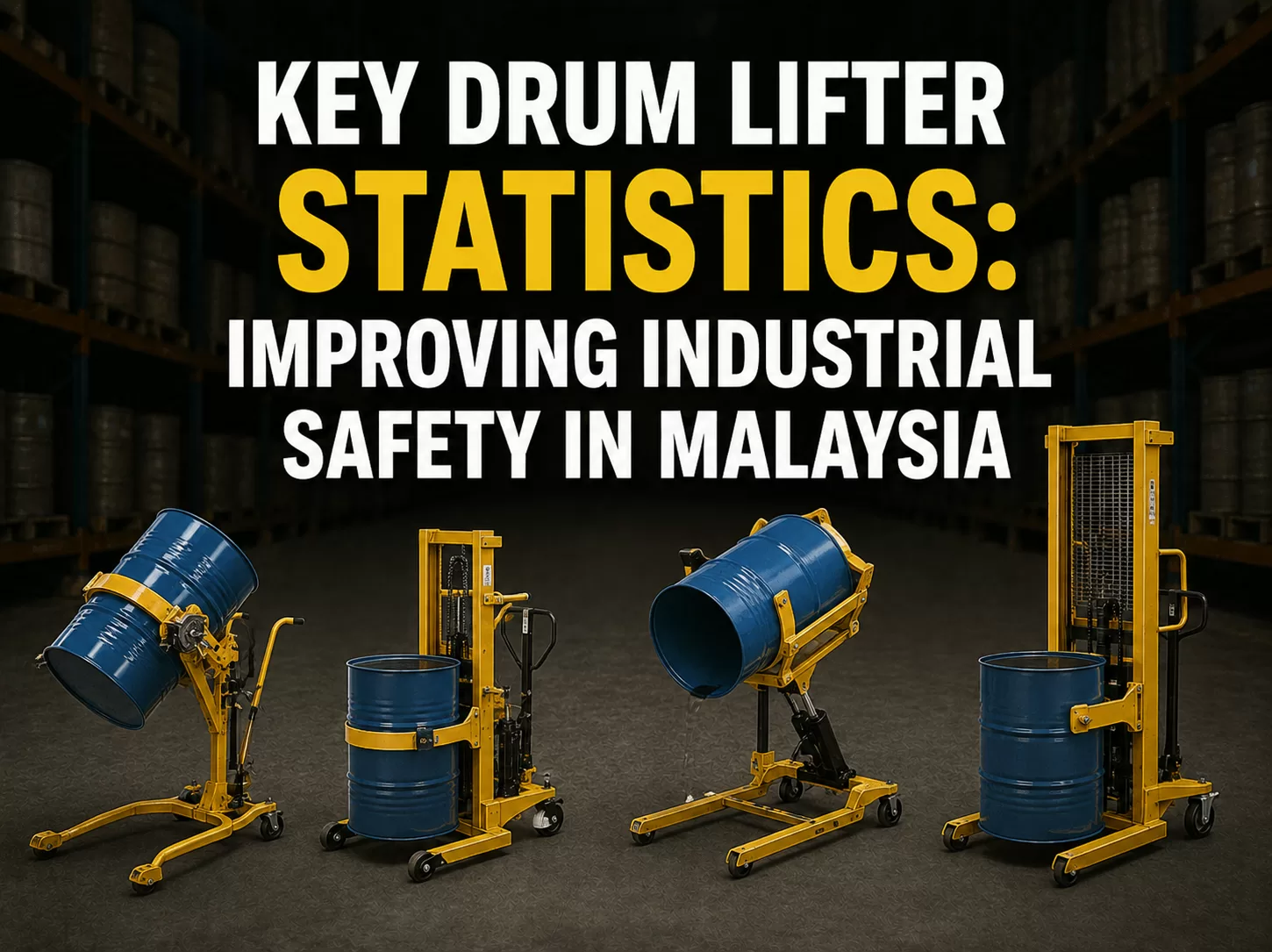
In Malaysia’s fast-growing industrial sector, material handling safety is a top priority—particularly when it comes to the movement of heavy drums. Drums, whether filled with chemicals, oils, or raw materials, are a common sight in manufacturing, chemical, and logistics environments. Improper handling can result in serious injuries, product loss, or environmental hazards. This article explores the key statistics, safety factors, and best practices surrounding drum lifters, helping safety officers, plant managers, and logistics professionals make better-informed decisions for their operations.
Understanding Drum Lifters: Essential Equipment for Safe Handling
Drum lifters are specialized material handling tools designed to safely lift, move, rotate, and position drums of various sizes and weights. In Malaysian industries, these lifters are vital for handling steel, plastic, or fiber drums, which often weigh between 100 to 300 kilograms each. The main types of drum handling equipment include manual drum lifters, hydraulic drum handlers, drum dollies, and forklift drum attachments. Each serves different operational needs, from basic drum movement to complex tilting and stacking tasks.
Modern drum lifters are engineered to reduce manual lifting, minimize operator strain, and improve overall workflow. The adoption of ergonomic designs and safety-focused features—such as secure gripping mechanisms, overload protection, and easy maneuverability—plays a crucial role in industrial safety strategies.
Industrial Safety: The Risks of Improper Drum Handling
Accidents related to drum handling are not uncommon in industrial environments. Globally, statistics show that manual handling injuries account for a significant percentage of workplace incidents, with musculoskeletal injuries, crushes, and chemical spills among the most frequent outcomes. In Malaysia, the Department of Occupational Safety and Health (DOSH) consistently identifies manual material handling as a critical area for safety improvement.
Key risk factors in drum handling incidents include:
- Manual lifting or moving of heavy drums without mechanical assistance
- Unstable or worn-out equipment leading to dropped loads
- Improper stacking or storage of drums
- Exposure to hazardous materials due to leaks or spills during movement
Implementing the right drum lifter reduces these risks considerably by providing stability, reducing physical strain, and ensuring safer load control.
Key Drum Lifter Statistics and Safety Insights
While precise, localized statistics on drum lifter use in Malaysia are limited, international studies and best practices offer valuable insight:
- Material handling equipment such as drum lifters can reduce manual handling injuries by up to 60% in industrial settings.
- Workplaces that adopt drum handling equipment report significantly fewer lost-time incidents and reduced workers’ compensation claims.
- Ergonomically designed lifters lead to higher productivity and lower fatigue-related errors among staff.
- Drum lifters with safety features, such as automatic locking mechanisms and controlled descent, have a proven track record of reducing dropped load incidents.
For Malaysian factories and warehouses, integrating these learnings into safety programs helps align with global standards and local regulatory requirements. Regular safety audits and equipment inspections further enhance workplace safety.
Best Practices for Drum Lifter Selection and Use
To maximize safety and efficiency, Malaysian businesses should consider several key criteria when selecting drum lifters:
- Load Capacity: Choose equipment rated for the heaviest drums handled in daily operations.
- Drum Type: Ensure compatibility with steel, plastic, or fiber drums commonly used on site.
- Mobility: Select between stationary, mobile, or forklift-attached solutions depending on workflow needs.
- Operator Training: Provide thorough training on drum lifter operation, safety checks, and emergency procedures.
- Maintenance: Schedule regular inspections and servicing to keep equipment in reliable condition.
- Ergonomics: Opt for designs that minimize bending, stretching, and manual lifting.
By following these best practices, organizations can significantly reduce the likelihood of workplace accidents and ensure compliance with DOSH safety standards.
How Drum Lifters Support Efficiency and Compliance in Malaysia
Beyond safety, drum lifters offer considerable productivity and compliance benefits for Malaysian industries. Efficient drum handling reduces downtime, speeds up loading and unloading, and enables more organized storage. This is especially critical for chemical plants and logistics operators dealing with high volumes of hazardous or heavy materials.
Regulations in Malaysia require businesses to provide a safe working environment, including proper equipment for material handling. Drum lifters help businesses meet these obligations, supporting both compliance and operational excellence.
Moreover, with the growing focus on Occupational Safety and Health (OSH) in Malaysia, companies investing in reliable drum handling solutions are better positioned to pass audits and attract clients who prioritize workplace safety.
Choosing a Drum Lifter Malaysia Partner for Your Business
When selecting a drum lifter supplier, partnering with an experienced provider like CCH Resources & Engineering Sdn Bhd ensures access to a wide range of drum handling equipment and customized solutions. With expertise in mild steel fabrication and after-sales support, businesses can rely on both product quality and ongoing maintenance for long-term safety and efficiency.
In conclusion, investing in the right drum lifter is not just about equipment—it’s a commitment to workplace safety, regulatory compliance, and operational improvement. As industrial demands grow in Malaysia, adopting advanced drum handling solutions is essential for protecting people, products, and profits.
Frequently Asked Questions
What is a drum lifter and why is it important in Malaysian industries?
A drum lifter is a specialized device designed to safely lift, move, and position industrial drums. In Malaysian industries, drum lifters are essential for minimizing manual handling risks, reducing workplace injuries, and ensuring compliance with safety regulations.
How do drum lifters enhance industrial safety?
Drum lifters reduce the need for manual lifting, which lowers the risk of musculoskeletal injuries and accidents. They offer stable, secure handling of heavy drums, preventing spills, drops, and exposure to hazardous materials.
What factors should I consider when choosing a drum lifter for my facility?
Key factors include the drum size and weight, type of materials handled, compatibility with existing equipment, mobility needs, ergonomic design, and the availability of safety features such as locking mechanisms and overload protection.
Are there safety regulations in Malaysia for drum handling equipment?
Yes, Malaysian regulations require companies to provide safe material handling solutions and regularly inspect equipment. The Department of Occupational Safety and Health (DOSH) sets standards and conducts audits to ensure compliance.
How often should drum lifters be inspected and maintained?
Drum lifters should be inspected before each use and subjected to regular maintenance per the manufacturer’s recommendations. Scheduled servicing helps prevent equipment failure and maintains safety standards.
Enhance Your Industrial Safety with Expert Drum Lifter Solutions
Ready to upgrade your workplace safety standards? CCH Resources & Engineering Sdn Bhd offers a comprehensive range of drum handling equipment, from manual lifters to advanced hydraulic solutions. With over 10 years of experience, we deliver reliable, ergonomic, and compliant equipment tailored for Malaysian industries. Trust our team for product supply, custom fabrication, installation, and after-sales support—ensuring your operations remain safe and efficient.