
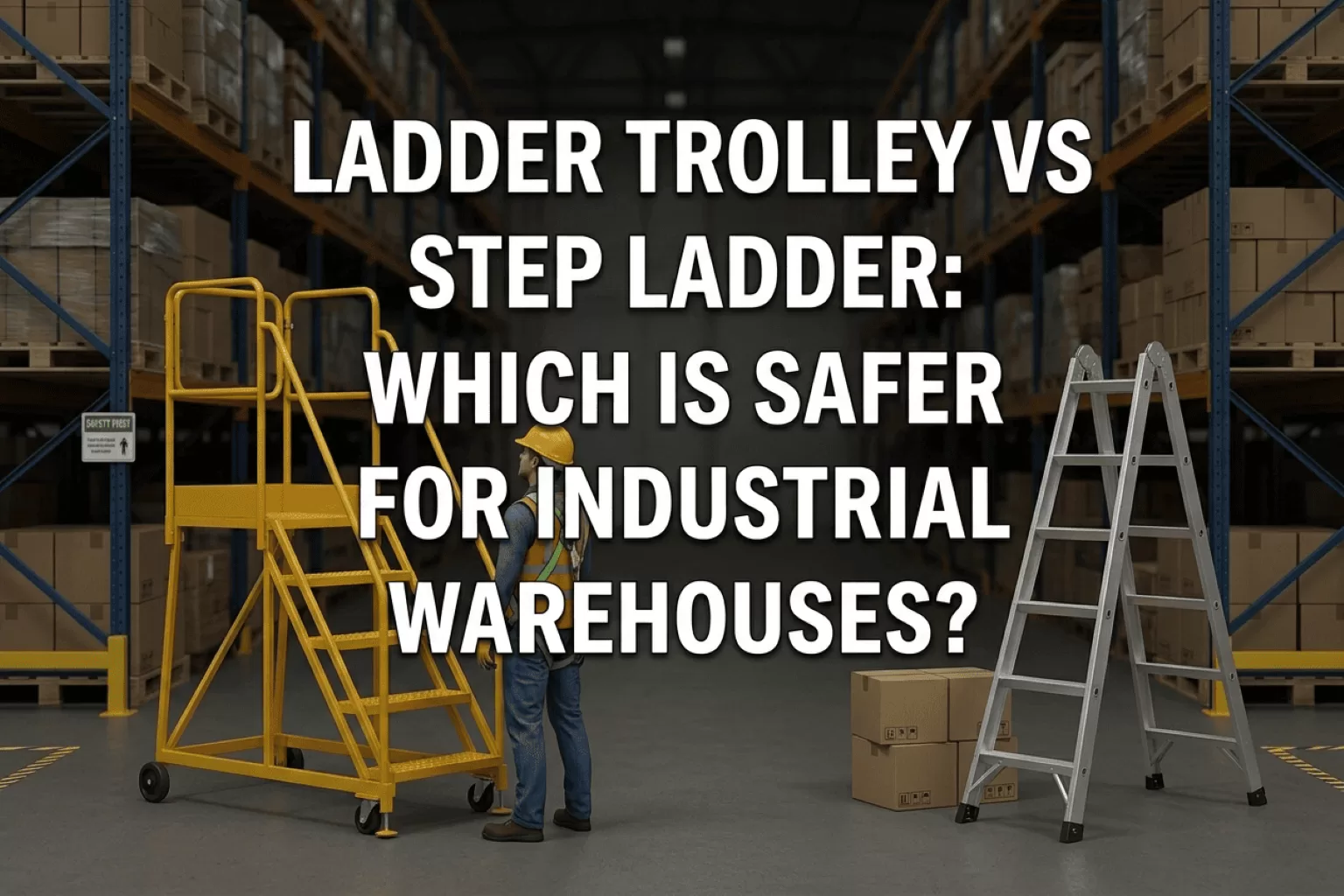
In fast-paced warehouse environments, working at height is a daily requirement for tasks such as stock picking, inventory checks, and shelving organization. Choosing the right access equipment plays a critical role in maintaining workplace safety and operational efficiency. One common comparison in industrial settings is the ladder trolley vs step ladder, especially for businesses looking to improve safety standards in Malaysia.
For companies evaluating safer alternatives, the ladder trolley in Malaysia is increasingly becoming the preferred solution due to its stability, mobility, and enhanced safety features.
Understanding Warehouse Working-at-Height Risks
Before comparing equipment, it is important to understand why working at height is one of the leading causes of warehouse accidents.
Common risks include:
- Loss of balance while climbing or descending
- Overreaching from ladders
- Slippery footwear or surfaces
- Improper ladder placement
- Fatigue during repetitive stock picking
- Collisions in busy warehouse aisles
Even minor missteps can lead to serious injuries, lost productivity, and operational downtime. This is why selecting the right access equipment is critical in industrial safety planning.
What Is a Step Ladder?
A step ladder is a portable, fixed-height ladder commonly used for quick access to elevated areas. It is lightweight and easy to move, making it suitable for simple, low-frequency tasks.
However, in industrial warehouse environments, step ladders have limitations such as:
- Limited stability during prolonged use
- No mobility while standing on the ladder
- Higher risk of overreaching
- Lack of guardrails for fall protection
- Unsuitable for frequent repetitive use
While step ladders are useful for basic maintenance or short-duration tasks, they are not designed for continuous warehouse operations where safety and efficiency are priorities.

What Is a Ladder Trolley?
A ladder trolley is a mobile access platform designed specifically for warehouse environments. It combines the functionality of a ladder and a trolley, allowing workers to safely access high shelves while also moving efficiently through aisles.
A ladder trolley in Malaysia typically includes:
- Wide anti-slip steps for secure footing
- Strong handrails or guardrails for fall protection
- Lockable caster wheels for stability during use
- Industrial-grade steel frame construction
- High load capacity design for warehouse operations
- Ergonomic structure for repeated daily use
This combination makes it far more suitable for structured warehouse environments compared to conventional ladders.
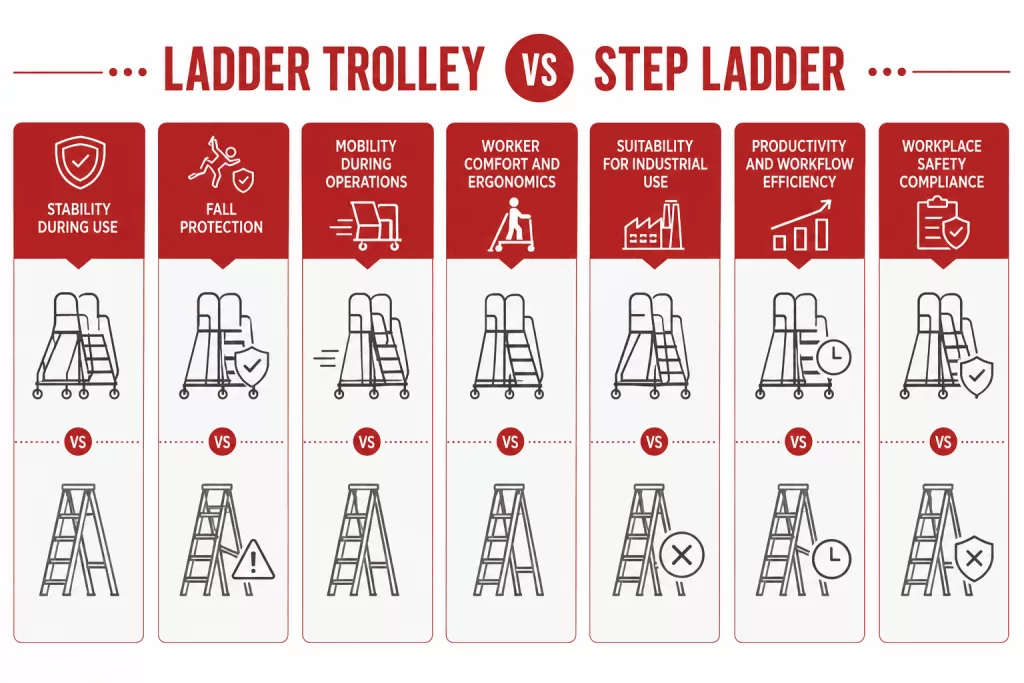
Ladder Trolley vs Step Ladder: Key Safety Comparison
Stability During Use
Proper stability is important when employees perform elevated warehouse tasks. Unstable access equipment can increase the risk of slips, falls, and operational accidents.
Step Ladder
Step ladders depend heavily on correct positioning and user balance during operation.
- Relies heavily on user balance
- Can become unstable on uneven flooring
- Limited support during repetitive use
- Higher risk of tipping during overreaching
Ladder Trolley
A ladder trolley in Malaysia is designed with enhanced structural stability for safer warehouse operations.
- Built with reinforced industrial frames
- Equipped with lockable caster wheels
- Provides a wider and more stable platform
- Better suited for continuous warehouse operations
Fall Protection
Fall prevention is one of the biggest concerns in industrial and warehouse environments where employees regularly work at height.
Step Ladder
Traditional step ladders provide limited protection against accidental falls during elevated work.
- Open-sided structure with minimal protection
- Higher risk of slipping while climbing
- Limited support when handling inventory
- Less protection during elevated work
Ladder Trolley
Ladder trolleys are designed with additional safety features to improve worker protection.
- Designed with anti-slip steps
- Includes handrails for added safety
- Stable platform reduces fall risks
- Better worker protection during warehouse tasks
Mobility During Operations
Warehouse efficiency depends on how quickly workers can move between storage areas while handling elevated tasks safely.
Step Ladder
Using step ladders often requires constant lifting and repositioning during daily operations.
- Requires manual lifting and repositioning
- Slower movement between warehouse aisles
- Increases physical strain on workers
- Less efficient for repetitive tasks
Ladder Trolley
A ladder trolley allows smoother movement throughout warehouse environments.
- Easy to move across warehouse floors
- Improves movement between storage areas
- Reduces unnecessary lifting effort
- Supports smoother operational workflow
Worker Comfort and Ergonomics
Comfort and ergonomics are important for reducing worker fatigue during repetitive warehouse activities.
Step Ladder
Repeated climbing on standard ladders may increase physical strain during long work shifts.
- Narrow steps may cause discomfort
- Repetitive climbing increases fatigue
- Less ergonomic for long-duration use
- Can strain workers during daily operations
Ladder Trolley
Ladder trolleys are designed to improve comfort and reduce physical stress during use.
- Wider steps improve foot stability
- Better support during elevated work
- Reduces physical strain on workers
- More comfortable for repetitive warehouse tasks
Suitability for Industrial Use
Industrial warehouses require durable access equipment capable of supporting daily operational demands.
Step Ladder
Step ladders are generally more suitable for light-duty or occasional use.
- Suitable for occasional light-duty work
- Not ideal for high-frequency warehouse use
- Limited durability for industrial environments
- Less efficient for large warehouse operations
Ladder Trolley
A ladder trolley in Malaysia is built specifically for industrial and warehouse applications.
- Designed for industrial warehouse applications
- Suitable for frequent elevated access tasks
- Built for long-term operational use
- Better for logistics and distribution environments
Productivity and Workflow Efficiency
Efficient warehouse operations require equipment that helps workers complete tasks quickly and safely.
Step Ladder
Traditional ladders can slow down workflow due to repeated repositioning and handling.
- Frequent repositioning slows workflow
- Workers spend more time moving equipment
- Less efficient for stock picking operations
- Can increase operational downtime
Ladder Trolley
Ladder trolleys help improve operational efficiency and workflow movement.
- Faster movement between work areas
- Improves warehouse productivity
- Supports efficient stock handling
- Helps streamline daily warehouse operations
Workplace Safety Compliance
Many businesses in Malaysia are improving workplace safety practices by investing in safer access equipment.
Step Ladder
Standard step ladders provide basic elevated access but may offer limited safety support for industrial environments.
- Basic access solution with limited safety features
- Higher risk during repetitive warehouse tasks
- May not fully support modern warehouse safety practices
- Requires greater user caution during operation
Ladder Trolley
Using a ladder trolley demonstrates stronger commitment to workplace safety and operational risk reduction.
- Supports safer warehouse working practices
- Designed with enhanced safety features
- Helps reduce workplace accident risks
- Demonstrates stronger commitment to employee safety
Which Is Safer for Industrial Warehouses?
From a workplace safety perspective, the ladder trolley in Malaysia is significantly safer for industrial environments.
Its advantages include:
- Reduced fall risk due to guardrails
- Improved stability during elevated work
- Safer movement between warehouse zones
- Better suitability for repetitive tasks
- Lower chance of human error during access work
Step ladders may still be used for very light or occasional tasks, but they do not meet the safety demands of modern warehouse operations.
Industry Standards and Safety Expectations
In Malaysia, warehouse safety practices are increasingly influenced by occupational safety expectations and internal compliance standards. Employers are expected to:
- Provide safer access equipment
- Reduce reliance on unstable ladders
- Minimize working-at-height risks
- Implement safer material handling systems
- Train employees on proper equipment usage
Using a ladder trolley aligns more closely with these operational safety expectations compared to traditional step ladders.
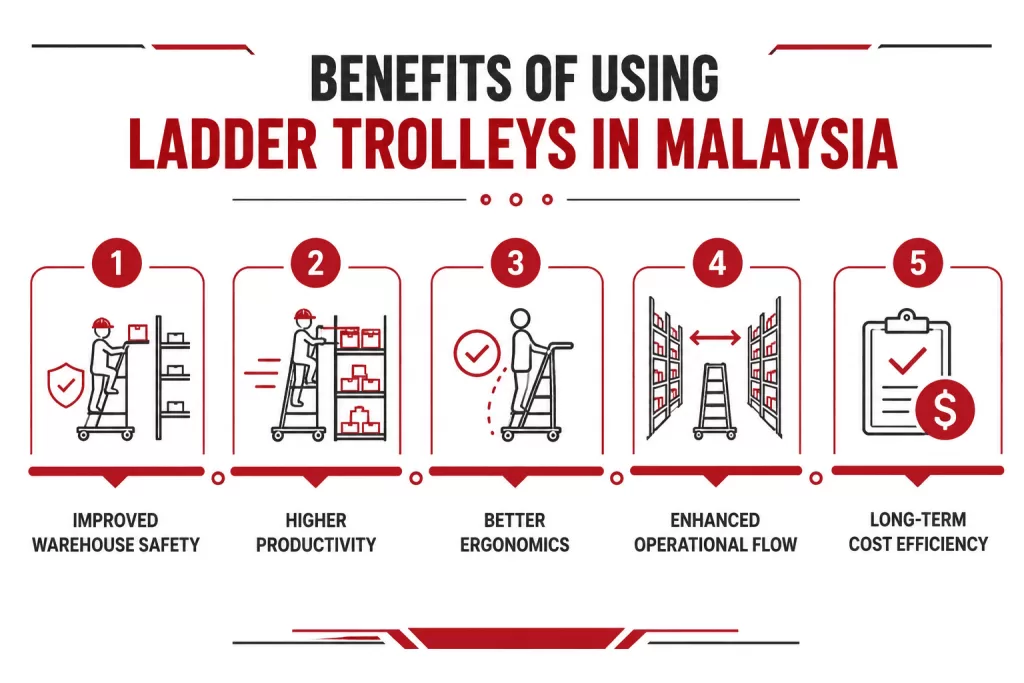
Benefits of Using Ladder Trolleys in Malaysia
Improved Warehouse Safety
Reduces risk of falls and injuries during elevated work activities.
Higher Productivity
Workers can move and access stock more efficiently without constant repositioning.
Better Ergonomics
Designed to reduce strain and improve worker comfort during repetitive tasks.
Enhanced Operational Flow
Supports smoother movement in narrow warehouse aisles and high-rack environments.
Long-Term Cost Efficiency
Durable industrial construction reduces replacement frequency and maintenance costs.
Common Warehouse Applications
A ladder trolley in Malaysia is widely used in:
- High-rack stock picking operations
- Inventory counting and auditing
- Retail stockroom organization
- Logistics and distribution center workflows
- Industrial maintenance and inspection tasks
- Facility cleaning and overhead access tasks
Safety Tips for Both Equipment Types
Regardless of equipment choice, proper safety practices are essential:
- Always inspect equipment before use
- Use on flat and stable surfaces
- Avoid overreaching while working at height
- Follow load capacity guidelines strictly
- Ensure proper staff training and supervision
- Keep warehouse aisles clear during operation
These practices help reduce workplace accidents and improve operational safety.
When Should You Upgrade from Step Ladder to Ladder Trolley?
Businesses should consider upgrading when:
- Stock levels exceed standard reach height
- Warehouse operations become repetitive
- Safety incidents or near-misses occur
- Productivity is slowed by ladder repositioning
- Staff frequently work at height daily
Upgrading to a ladder trolley in Malaysia is often a proactive safety investment rather than a reactive one.
Upgrade Your Warehouse Access Equipment Today
Need a reliable ladder trolley in Malaysia for safer warehouse operations? CCH Resources & Engineering offers quality access equipment built for industrial use, helping businesses improve safety, efficiency, and daily workflow.
Conclusion
When comparing a ladder trolley vs step ladder, the ladder trolley clearly offers better safety, stability, and efficiency for industrial warehouse environments. For businesses in Malaysia looking to improve workplace safety and streamline operations, investing in a reliable ladder trolley in Malaysia is a practical long-term solution.
By replacing traditional step ladders with safer alternatives, companies can significantly reduce workplace risks while improving productivity, compliance, and operational performance.
Frequently Asked Questions (FAQs)
What is a ladder trolley used for?
A ladder trolley is used for safe elevated access in warehouses, factories, and storage facilities. It helps workers perform tasks such as stock picking, inventory checking, and maintenance work more safely.
Is a ladder trolley safer than a step ladder?
Yes, a ladder trolley is generally safer because it provides better stability, anti-slip steps, guardrails, and lockable wheels that reduce the risk of falls during warehouse operations.
Which industries commonly use ladder trolleys in Malaysia?
Industries such as warehousing, logistics, manufacturing, retail, and distribution commonly use ladder trolleys for safer and more efficient access to high storage areas.
What safety features should a ladder trolley have?
Important safety features include anti-slip steps, strong handrails, lockable caster wheels, durable construction, and a stable platform for elevated work.
How do I choose the right ladder trolley in Malaysia?
You should consider factors such as platform height, load capacity, wheel quality, safety features, build material, and the type of warehouse operations involved.